Marine Low Carbon Day 9
Participants: Interns
Guides: Biologists & Research Boat Crew
Date: 22 May 2026
Venue: Pulicat Lake (Brackish Lagoon, Andhra Pradesh–Tamil Nadu Border)
Theme: Brackish Water Ecology
Focus: Blue Carbon & Biodiversity
Scope
To provide participants with hands-on exposure to the ecology of a brackish water ecosystem and to assess its biodiversity, environmental health, and conservation challenges. The visit aimed to enhance understanding of lagoon ecosystems, wildlife habitats, blue carbon ecosystems, and the impacts of human activities on coastal environments.
Content
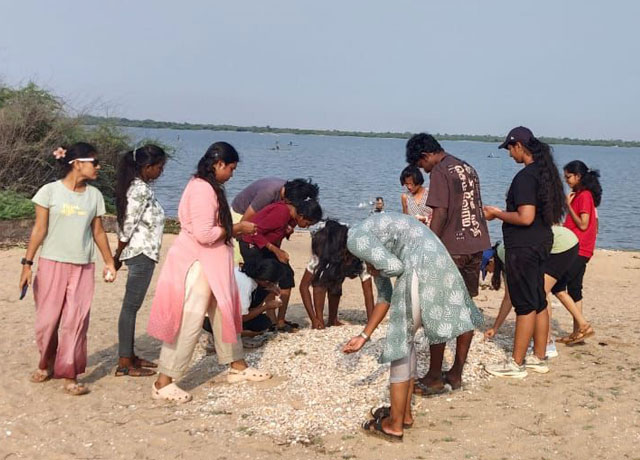
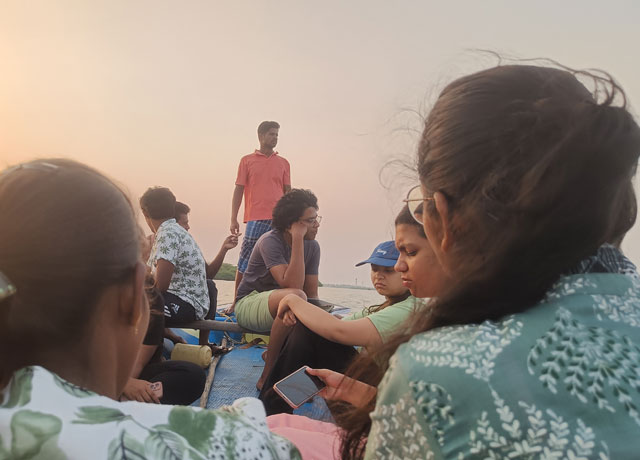
Participants undertook an early morning field survey of Pulicat Lake aboard a research boat guided by biologists. The visit involved observing the physical and ecological characteristics of the lagoon and conducting basic environmental assessments. At designated sampling locations, interns collected and examined aquatic organisms such as snails, amphipods, phytoplankton, and shell species. Water quality measurements, including pH assessment, were demonstrated using scientific instruments. The survey documented various forms of anthropogenic pollution, including plastic bottles, bags, glass fragments, and other waste materials along the shoreline.
The field visit also included biodiversity observations, with participants recording numerous resident and migratory bird species such as Painted Storks, Cattle Egrets, Indian Pond Herons, and pelicans. Extensive seagrass beds, particularly Halophila ovalis, were observed in shallow waters, highlighting the ecological importance of blue carbon ecosystems. Discussions focused on the interconnected roles of seagrasses, mangroves, mudflats, fisheries, and local livelihoods. Participants also learned about traditional resource use practices, including fishing, crab harvesting, and salt production within the lagoon ecosystem.
Pulicat Lake Ecosystem Components
Seagrass Beds
Halophila ovalis – Blue carbon ecosystems in shallow waters
Mangroves
Coastal vegetation supporting biodiversity and carbon storage
Mudflats
Intertidal areas supporting migratory birds and benthic organisms
Fisheries
Supporting local livelihoods and traditional resource use
Biodiversity Observations
Bird Species Recorded
- Painted Storks
- Cattle Egrets
- Indian Pond Herons
- Pelicans
Aquatic Organisms Sampled
- Snails
- Amphipods
- Phytoplankton
- Shell species
Environmental Assessment Activities
Traditional Resource Use Practices
Fishing
Traditional fishing practices in the lagoon ecosystem
Crab Harvesting
Sustainable crab collection methods
Salt Production
Traditional salt extraction practices
Outcome
Participants gained a comprehensive understanding of the ecological significance of Pulicat Lake as a biodiverse brackish water ecosystem. They observed the vital role of seagrasses, mangroves, and mudflats in supporting wildlife, maintaining ecosystem productivity, and sequestering carbon. The field experience reinforced concepts of blue carbon conservation and ecosystem connectivity discussed during earlier lectures. Interns also recognized the serious impacts of plastic pollution and other human-induced pressures on coastal habitats. The visit enhanced their skills in ecological observation, biodiversity assessment, and environmental monitoring while fostering greater awareness of the need for sustainable management and conservation of lagoon ecosystems.
Key Takeaways
Blue Carbon
Understanding seagrass and mangrove carbon sequestration
Biodiversity
Rich avian and aquatic biodiversity of brackish ecosystems
Pollution Impact
Anthropogenic pollution threats to coastal habitats
Community Link
Traditional livelihoods and sustainable resource use
Activity Gallery